Select your language




The best discounts and cashbacks for trading on spot and futures
 The best discounts on popular cryptocurrency exchanges that are available to our subscribers! When registering using these referral links, you get the maximum possible cashback and all possible bonuses, and also support us.
- Binance is the undisputed leader among crypto exchanges in the world.
- OKX - 20% cashback on commissions when trading on the spot and futures market.
- MEXC - 20% discount on commissions. MEXC has the lowest commissions for trading, sometimes there are promotions with zero commissions.
- ByBit - Reward up to $30,050 in trading bonus. $50 for registration and up to $30,000 for deposits.
- Gate.io - 20% discount on commissions when trading on spot and futures.
- BitGet - 20% discount on trading commission.
- Hyperliquid - a major DEX exchange, it accounts for 80% of the DEX futures market.
Read more … The best discounts and cashbacks for trading on spot and futures
- Details
-
Also available:

 Cryptocurrency exchange Bitget has launched the Alliance Program, a rewards program that allows users to receive a share of the platform's trading fee revenue. An amount equivalent to 30% of the exchange's eligible net trading fee revenue is allocated to the rewards pool. Users can earn rewards for trading activity and holding assets in their accounts. The program runs from September 28 to October 26, 2026. Users can qualify for rewards in either category or both, provided they meet the applicable requirements.
Read more: Bitget distributes 30% of trading fees among users: how the Alliance Program works
- Details
-
Also available:

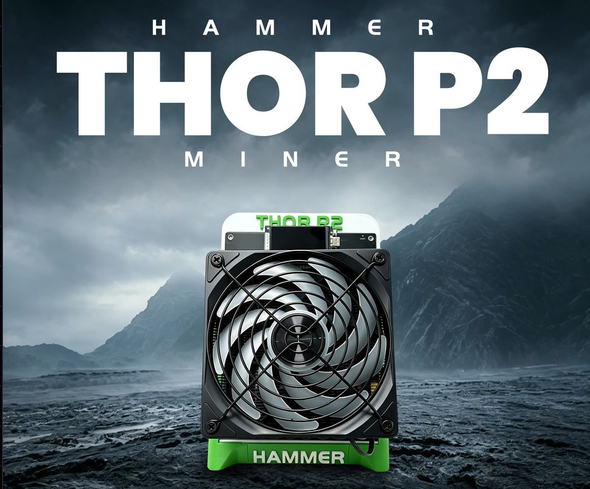 Using ASIC miners for cryptocurrency mining is typically not associated with home use due to high power consumption and noise. However, demand creates supply, and the market offers a variety of ASIC miner models designed for home use. The main problem with such solutions is the use of outdated ASIC chips that no longer provide profitability, as the cost of electricity exceeds the earnings from mining on such devices. Recently, the company Hummer released the ASIC Hammer THOR X1 and P2 to the market, featuring the latest-generation ASIC chips BM1373, which are used in the latest-generation industrial Bitcoin mining rigs – Antminer S23.
Read more: Hammer THOR X1 and P2 – Home ASIC Miners with BM1373 Chips from Antminer S23
- Details
-
Also available:
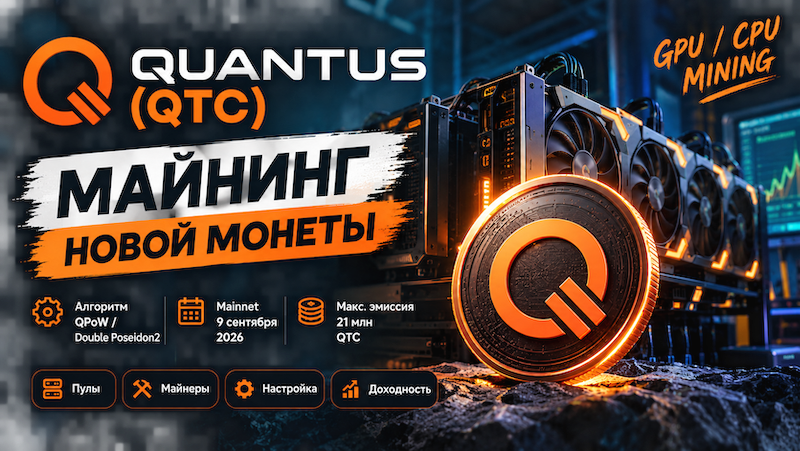 Quantus (QUAN) is a new Proof-of-Work cryptocurrency that launched its mainnet on September 9, 2026. The project focuses on post-quantum cryptography, privacy, and the use of Poseidon2 technology for PoW consensus. At launch, the main way to obtain QUAN is through GPU mining. The official Quantus Miner, several third-party optimized miners, and several mining pools are already available. In this article, we will look at what Quantus is, how to set up QUAN mining on NVIDIA and AMD GPUs, which miners to use, how to connect to a pool, and what to consider when choosing hardware.
Read more: Quantus (QUAN) Mining: A Detailed Guide. How to Mine the New Coin Using GPUs in 2026
- Details
-
Also available:

 The Nvidia CMP170HX graphics card appeared during the dawn of the mining era in 2021 and is a heavily stripped-down version of the AI accelerator A100. Instead of 64GB or 80GB of video memory, Nvidia artificially limited the fast HBM2e memory capacity on the mining-oriented CMP170HX to 8GB or 10GB at the software level. Until recently, CMP170HX cards were selling for as little as $200, since they were good for nothing other than mining — and mining, as we know, hasn't been thriving in 2026. Everything changed within just a few days after the appearance of the CMPUnlocker program, which removes the factory memory lock at the software level, turning the CMP170HX from 8GB into 64GB, and for the 10GB versions, owners can get the full 80GB of VRAM.
Read more: CMPUnlocker can unlock 80GB of video memory instead of 8GB on the CMP170HX
- Details
-
Also available:
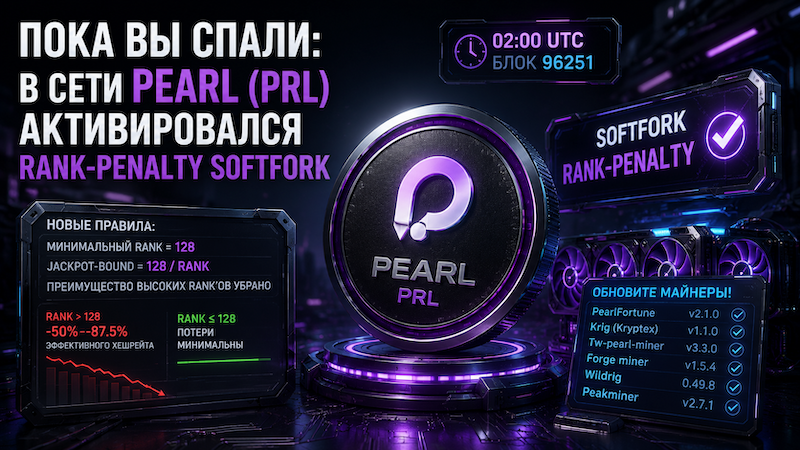 On the night of August 6, 2026, a softfork took place on the Pearl network. The rank-penalty softfork activated at approximately 02:00 UTC (block 96251). This is the event many miners discovered in the morning after noticing a drop in hashrate. In the Pearl protocol there is a parameter called noise rank. The higher the rank, the “easier” it was to obtain a valid jackpot (reward) for the same amount of work. Some miners deliberately mined at high ranks and received a disproportionately large effective hashrate and rewards. The team investigated abnormal mining optimizations. As a result, the softfork introduced a penalty mechanism and established new rules.
Read more: Rank-penalty softfork activated on the Pearl (PRL) network
- Details
-
Also available:
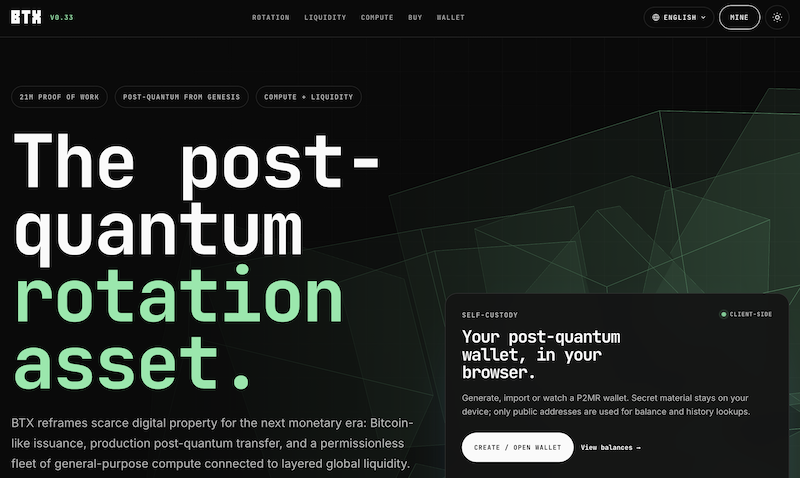 BTX is a new coin created as a post-quantum rotational asset. BTX rethinks scarce digital ownership for the next era of money: emission following the Bitcoin model, post-quantum value transfer during mining, and a permissionless fleet of universal computing power connected to multi-level global liquidity. This formulation highlights the uniqueness of BTX as an asset ready for future quantum computer challenges, while preserving Bitcoin's core principles and integrating computing resources into the global financial ecosystem. In this material we will review the possibility of mining BTX on modern graphics cards.
Read more: BTX - overview of the new coin and GPU mining setup in 2026
- Details
-
Also available:
 Centralized crypto exchanges continue to lead as the primary tools for storing and exchanging digital assets. Their user-friendly interfaces, instant access to trading operations, wide selection of coins, and additional services like staking, futures, and copy trading attract millions of users worldwide. However, behind this external comfort lies a whole set of serious risks that can lead to partial or complete loss of funds. In this article, we will take a detailed look at why storage on CEX remains popular but extremely risky, list the main threats with real cases, reveal hidden problems, and provide practical recommendations for minimizing losses. If you actively trade or simply hold assets on Binance, Bybit, Coinbase, KuCoin, or other platforms, this article will help you reconsider your security strategy.
Read more: 5 Common Risks of Storing Cryptocurrencies on Centralized Exchanges in 2026
- Details
-
Also available:
 Many beginners in cryptocurrency trading overlook exchange fees, only to discover that trades which initially appeared profitable end up generating losses. This is especially noticeable in futures trading with high leverage, where trading costs can quickly eat into your profits.
Read more: How to Reduce Crypto Exchange Fees and Increase Your Trading Profits
- Details
-
Also available:
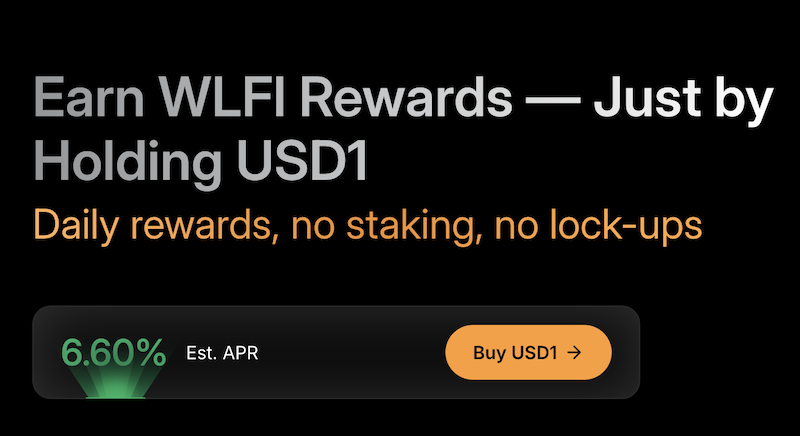 Many USDT holders face the same problem - their stablecoins just sit idle on the balance and generate no income. A solution has appeared on Bybit in the form of the USD1 Earn product. It is a simple tool that allows you to earn about 10% per year with daily accruals, without staking or locks. USD1 is a stablecoin issued by the World Liberty Financial project, associated with the Trump family. The launch took place in March 2025. The asset's reserves are formed from cash and US government bonds, and portfolio management was entrusted to BlackRock. At the moment, the capitalization of USD1 has exceeded 4 billion dollars. How to connect USD1 Earn in 4 steps - read on.
Read more: USD1 Earn on Bybit: How to Make Stablecoins Work and Earn Up to 10% APY Without Freezing.
- Details
-
Also available:
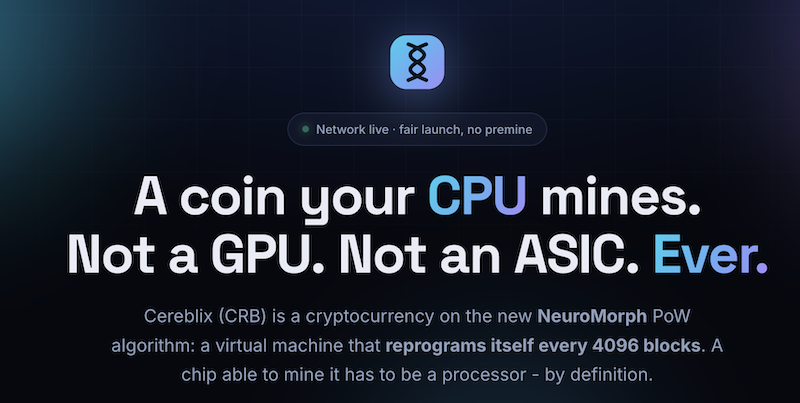 Cereblix (CRB) is a fresh CPU-only cryptocurrency built on a fundamentally new PoW algorithm called NeuroMorph. The algorithm is a virtual machine that autonomously reprograms itself every 4096 blocks. This delivers lifelong protection against ASICs and GPUs. The coin launched fairly in 2026 with no premine, no VC allocations, and no team reserves. The network truly belongs to regular users with laptops and home PCs. NeuroMorph uses brain-like random programs with branches, cache-friendly memory, and dynamic rule changes. This is not just hashing - it is an evolving "brain" running on your processor.
- Details
-
Also available:
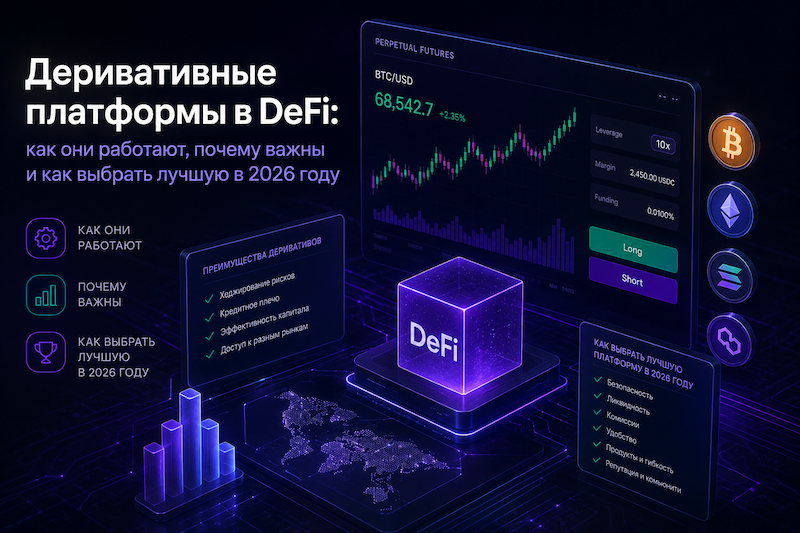 As of April 2026, the derivatives market accounts for about 85% of the total trading volume in the crypto industry. Perpetual contracts (perpetuals or perps) have become the dominant instrument, while decentralized platforms (perp DEX) are rapidly capturing market share from centralized exchanges (CEX). Hyperliquid has proven that fully on-chain solutions can compete with Binance or Bybit in speed and convenience, sparking a wave of innovation. In less than a year, the perp DEX segment has turned into one of the most competitive and dynamic areas in DeFi - featuring new architectures, high leverage, zero fees, and fierce competition for liquidity. In this article, we will break down in detail how perp DEX work, their key mechanisms (margin, liquidations, funding rate), advantages over CEX, risks, and provide a thorough comparison of market leaders: Hyperliquid, Aster, Extended, and Lighter. You will learn how they differ and how to choose the right platform for your needs.

Subscribe to our Telegram channel @cryptoage_com, be the first to know the news about cryptocurrencys.
Chat with crypto enthusiasts and miners in Telegram @CryptoChat
Breaking news

Links and Projects
 Cryptoage in Telegram. Group in messenger.
Mining Soft Alerts. Mining Soft monitor.
 Coinbubbles.ru. Coins visualization.
 Profit-Mine.com. Mining calculator.
Bonuses and Partners
 ByBit - TOP-2 exchange. Bonus up to $30 050.
 OKX - TOP-3 exchange. Comission discount 20%.
 MEXC - Lowest comissions ever. Discount 20%
 HiveOS - The Best OS for Mining.
 SPLIT - Buy STARS and TG Premium without KYC.
 Tonnel - Gifts market on Telegram.
Crypto F.A.Q