
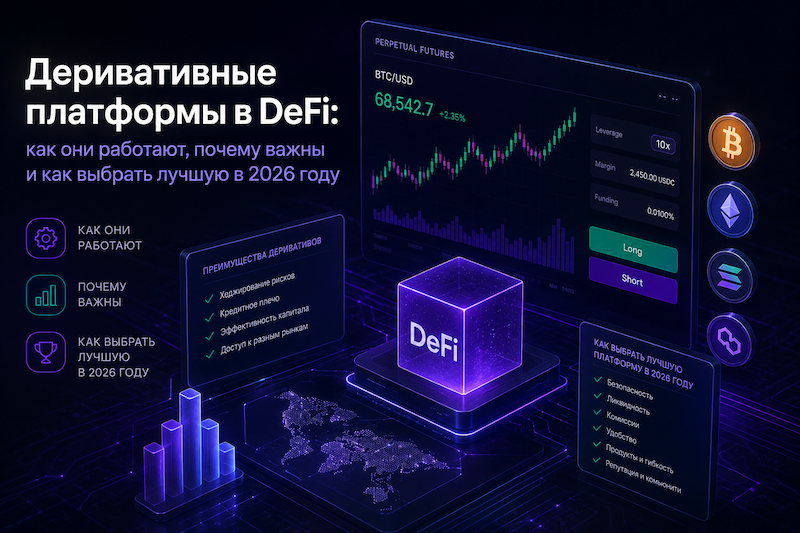
 As of April 2026, the derivatives market accounts for about 85% of the total trading volume in the crypto industry. Perpetual contracts (perpetuals or perps) have become the dominant instrument, while decentralized platforms (perp DEX) are rapidly capturing market share from centralized exchanges (CEX). Hyperliquid has proven that fully on-chain solutions can compete with Binance or Bybit in speed and convenience, sparking a wave of innovation. In less than a year, the perp DEX segment has turned into one of the most competitive and dynamic areas in DeFi - featuring new architectures, high leverage, zero fees, and fierce competition for liquidity. In this article, we will break down in detail how perp DEX work, their key mechanisms (margin, liquidations, funding rate), advantages over CEX, risks, and provide a thorough comparison of market leaders: Hyperliquid, Aster, Extended, and Lighter. You will learn how they differ and how to choose the right platform for your needs.
What are derivatives platforms (perp DEX)
Perpetual DEX are decentralized protocols for trading derivative financial instruments whose price is tied to an underlying asset (crypto, stocks, commodities, etc.). Unlike spot trading, where you actually buy or sell the asset, here you speculate purely on price changes without owning it.
The main product is the perpetual contract. This is a futures contract without an expiration date, with three key features:
- No expiration - you can hold a position for as long as you want.
- Funding rate - periodic payments between long and short traders to keep the contract price close to the spot price.
- Leverage - the ability to trade volumes many times larger than your deposit (from 10x to 1001x on certain platforms).
Unlike CEX, perp DEX run on smart contracts without intermediaries. Trades, margin, and liquidations (full or partial) are recorded on the blockchain. This provides full control over funds, no KYC, global accessibility, and transparency. However, execution depends on network architecture, oracles, and liquidity.
How decentralized derivatives platforms are structured
Perp DEX must solve the same tasks as CEX: order processing, PnL calculation, margin management, and liquidations. But in DeFi, every operation is a blockchain transaction, which adds complexity with delays and gas fees.
Main architectures:
- Order book (Central Limit Order Book, CLOB). The classic exchange order book: limit and market orders are collected in a registry and executed by price and time priority. It provides the best price and transparency. Implementation varies: Hyperliquid integrated CLOB directly into its L1 blockchain for sub-second finalization. Others use L2 or hybrids.
- Automated Market Maker (AMM). Liquidity in pools, with the pool acting as the counterparty. Price is supplied by an oracle. It uses the funding rate for balance. Example - GMX. Advantage: passive liquidity. Disadvantage: dependence on oracles and slippage.
- Hybrid models. They combine CLOB + AMM + temporal liquidity (for example, Drift on Solana) or off-chain matching with on-chain settlement (dYdX V4). Today, CLOB is considered the gold standard for pro traders but requires powerful infrastructure.
Examples of popular derivatives platforms and their features
The segment is extremely competitive. Let's look at the key players: Hyperliquid, Aster, Extended, and Lighter. Each offers a unique approach to performance, privacy, liquidity, and user experience.
Hyperliquid
- Token: HYPE.
- Supported assets: 185+ (crypto, commodities, indices).
- Fees: ~0.015% maker / 0.045% taker (low, gasless).
- Architecture: Proprietary L1 blockchain (HyperCore) with fully on-chain CLOB. Sub-second confirmation, processing 200k+ orders per second, zero gas.
- Features: Full transparency (all trades, funding, liquidations on-chain), leverage up to 50x (higher on select markets), spot + perps, advanced orders (limit, stop, TWAP, etc.), integrations (TradingView, mobile app). One of the leaders in open interest and organic liquidity.
- Strengths: Interface similar to CEX + maximum decentralization and transparency. Ideal for active traders and institutions.
Aster
- Token: ASTER.
- Supported assets: 100+ (crypto + 24/7 stock perps like AAPL, TSLA, NVDA).
- Fees: ~0.01% maker / 0.035% taker (among the lowest).
- Architecture: Multichain (Arbitrum, BNB, Solana, Ethereum, etc.), hybrid: Pro Mode (CLOB with hidden orders) + Simple/1001x Mode (AMM-style, one-click, MEV-resistant). Working on Aster Chain (ZK L1 focused on privacy).
- Features: Up to 1001x leverage in Simple mode, hidden orders for privacy of large trades, yield-bearing collateral (USDF, etc.), stock perps, grid trading, mobile app.
- Strengths: Versatility for beginners and pros, powerful incentives/airdrop, privacy features. Rapidly gaining volume thanks to convenience and Binance connections.
Extended
- Architecture: zk-enabled on Starknet (previously StarkEx), unified margin system (one margin across all markets: perps, spot, lending, vaults).
- Supported assets: Crypto + TradFi (XAU, SPX, etc.), up to 100x leverage.
- Features: Self-custody, on-chain settlement, yield-generating collateral, multiple assets as collateral. Focus on composability and a single account for all products. Low latency (<10ms execution).
- Strengths: Integration of TradFi and crypto in one interface, capital efficiency, transparency through zk. Suitable for traders looking to diversify beyond pure crypto and earn yield on collateral.
Lighter
- Architecture: Custom ZK-rollup on Ethereum/Arbitrum with verifiable matching and liquidation on-chain (ZK proofs for all operations).
- Features: Zero fees for retail traders, very low latency, CEX-level performance. Lighter Liquidity Pool (LLP) with up to 60% APY. Mobile app, RWA perps. Non-custodial, Ethereum network security.
- Strengths: Maximum cryptographic guarantee of fairness, zero fees as a powerful entry point, scalability. Attracts high-frequency and professional traders.
Key differences:
Hyperliquid - champion in transparency, speed, and organic liquidity on a dedicated L1 blockchain (for those who value "fully on-chain").
Aster - the most user-friendly with dual modes (simple or pro), extreme leverage, and stock exposure (for mass adoption and privacy).
Extended - unified margin and TradFi integration (for a comprehensive portfolio).
Lighter - ZK-verifiability + zero fees (for those sensitive to costs and traders focused on privacy and security).
Hyperliquid leads in open interest, Aster - in trading incentives and volume growth, Lighter and Extended - in ZK innovations and efficiency.
Advantages and limitations of derivatives DEX
Advantages:
- Non-custodial - no risk of freezing or CEX hacks.
- Transparency - everything is verifiable on-chain.
- Globality and borderlessness - no KYC.
- Innovation - new liquidity models, privacy, yield on collateral.
- Access to complex strategies (hedging, arbitrage) with high leverage.
Limitations:
- Complex UX for beginners.
- Lower liquidity compared to CEX (higher slippage on small pairs).
- Limited selection (mostly perps).
- Tech risks: smart contracts, oracles, network delays.
- Volatility of funding rates and liquidations.
How to choose a derivatives platform
Consider:
- Infrastructure and speed - dedicated L1 (Hyperliquid) or ZK (Lighter/Extended) for the best UX.
- Liquidity and assets - Hyperliquid/Aster for depth.
- Fees and incentives - Lighter (zero fees), Aster (rewards).
- Security - audits, track record, ZK-verifiability.
- Functionality - leverage, modes (Simple/Pro), mobile, advanced orders.
- Your goals - beginner: Aster Simple mode; professional: Hyperliquid CLOB; yield/TradFi: Extended.
Test with small volumes and stay updated on changes.
How to start trading (example with Hyperliquid)
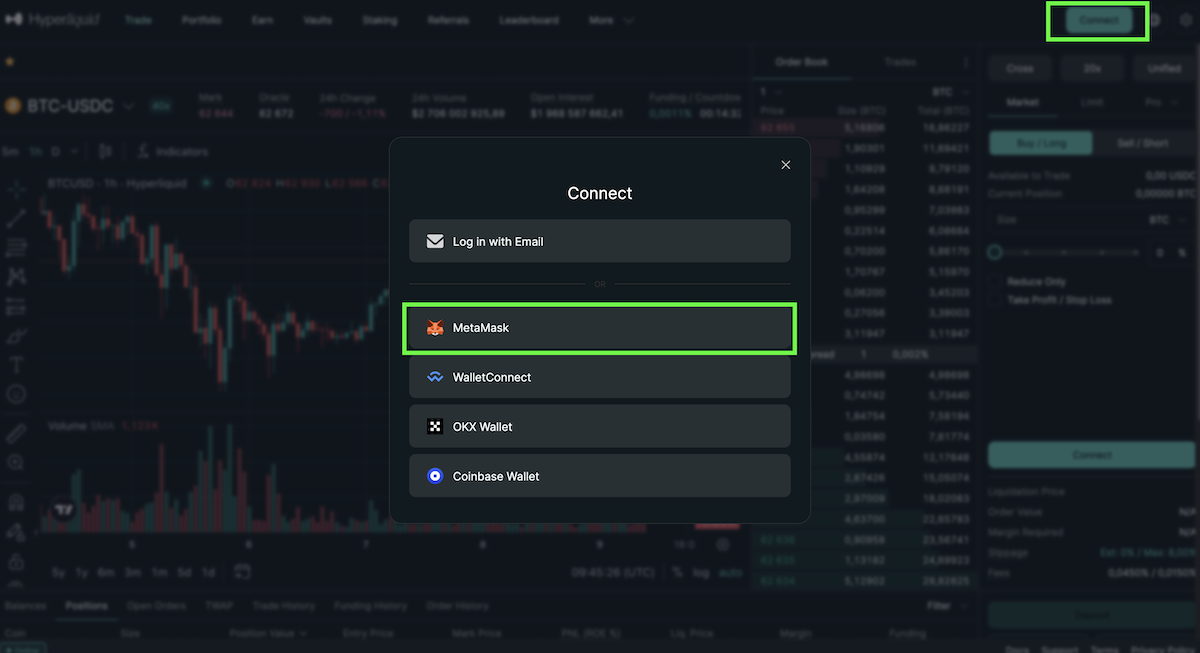
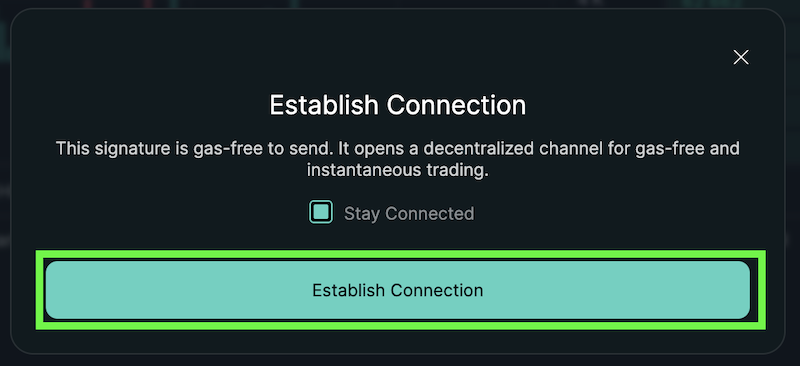
Connection: Connect wallet (MetaMask/Rabby) or email (auto-wallet).
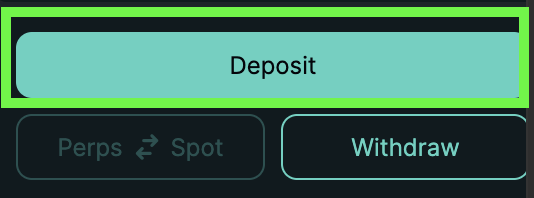
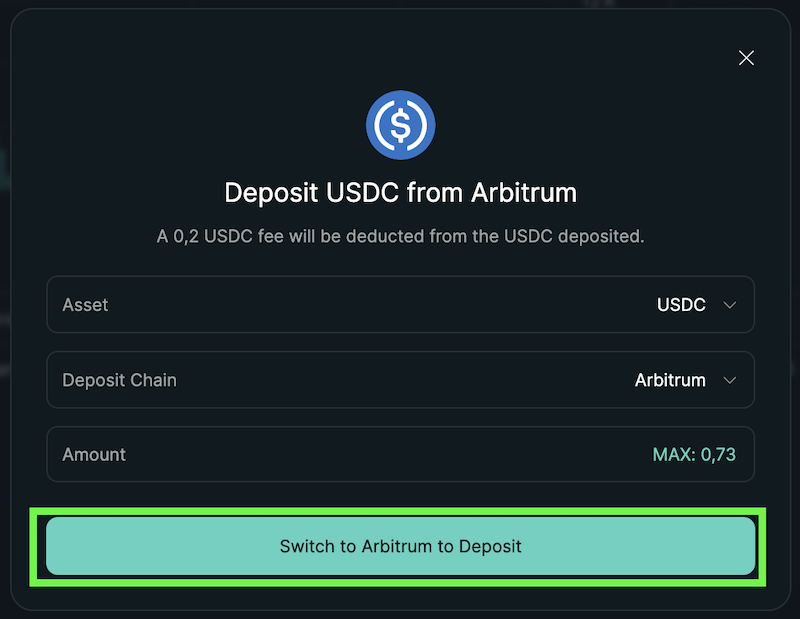
Deposit: USDC on Arbitrum (or bridge other assets).
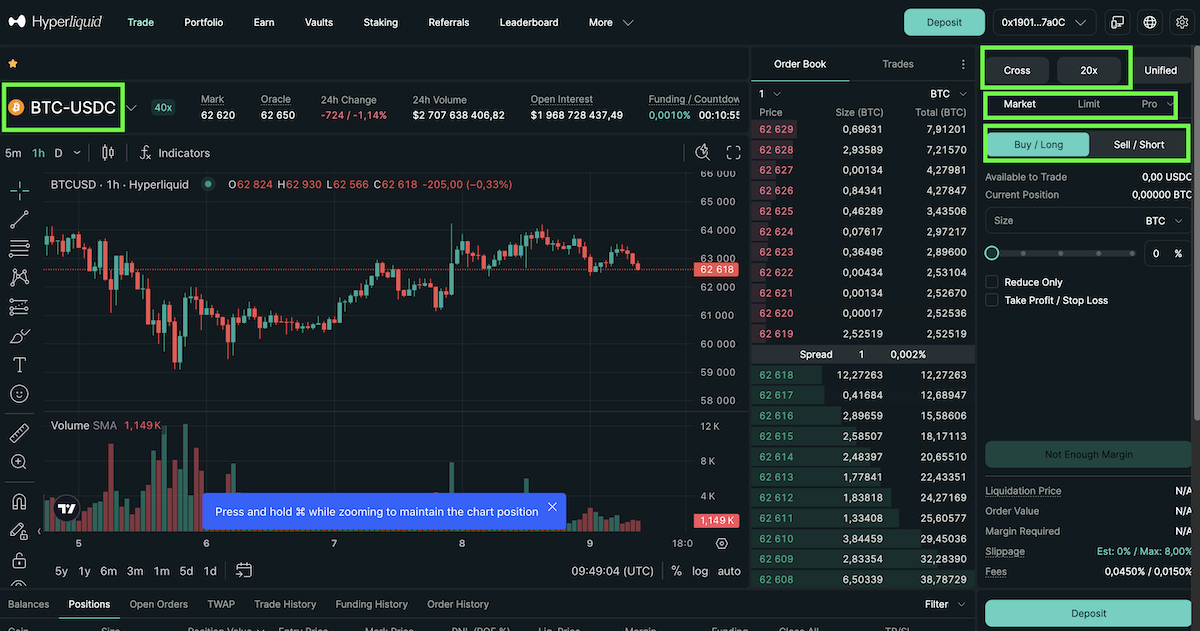
Trading: Select pair, long/short, leverage, order type. Gas is free.
Similar on other platforms, with nuances in bridging and modes.
Frequently Asked Questions
- What are derivatives? Instruments dependent on the price of the underlying asset, for speculation without ownership.
- How do futures, options, and perps differ? Perps - no expiration + funding.
- What is a perp DEX? A decentralized platform for perpetual contracts with on-chain mechanics.
Conclusion
In 2026, perp DEX are not an experiment but a full-fledged alternative to CEX with better security and innovation. Hyperliquid sets the standard for transparency, Aster democratizes trading and promotes it to the masses, Extended unites worlds, Lighter revolutionizes verifiability and cost. Competition leads to better products for traders.
Choose consciously, manage risks (especially leverage and liquidations), and diversify. DeFi perps open new opportunities - use them wisely.